
January 2, 2026
Abstract
This article argues that biological diversity can be explained through normal genetic reproduction and inherited variation without requiring macroevolution driven by the random mutations evolution requires. It focuses on the evolutionary claim that rare, random, nonsynonymous germline mutations serve as the primary mechanism responsible for generating new traits, increased fitness, and large-scale morphological change over time. The article questions whether such mutations can be empirically demonstrated as the source of macroevolutionary transformations and examines both fossil evidence and modern genetic research to evaluate the claim.
The paper contends that ancient DNA evidence is too fragmented, incomplete, and population-limited to substantiate pre-mutational genetic sequences across entire ancestral populations. It further argues that modern laboratory and medical research overwhelmingly associates these rare mutations with harmful outcomes such as disease, cancer, deformities, and genetic disorders rather than beneficial evolutionary innovation. Based on these observations, the article concludes that the proposed mutation mechanism for macroevolution lacks sufficient empirical support and suggests that biological variety is better explained through preexisting genetic design and normal reproductive inheritance rather than evolutionary processes.
A few clarifications
First, microevolution and macroevolution are not separate phenomena, but the term macroevolution is used here to focus specifically on the proposed genetic mechanisms responsible for large-scale morphological change. Second, mutations occur in many forms. Some are neutral or silent and do not alter protein function measurably, while other mutations do modify protein structure or expression. The central question is whether random germline mutations can empirically account for the origin of novel biological complexity and morphology. Third, comparative genomics interprets genetic similarity as evidence of common ancestry, but similarity alone does not identify the actual mechanism by which new functional genetic information originated.
Reproduction explains everything we observe- evolution is not needed
Genetics, based on normal reproduction, that is without any mutations, explains everything about diversity of species (really within the taxonomic “family”). Evolution is posited to explain HOW species diversity formed in the first place. The heart of the question is WHAT measurable genetic process drives morphology or diversity we call “macroevolution?” What mechanism might suffice?
Macroevolution must demonstrate a mechanism

The answer which the modern theory of evolution proposes as the primary mechanism are certain extremely rare mutations. Mutations that modify the folded protein or its function toward fitness gains and ultimately morphology. This paper focuses on a narrow category of mutations to seek to identify an empirical genetic process to explain how macroevolution might have occurred (or is occurring).
These mutations are (i) Germline; (ii) De Novo (random); (iii) Nonsynonymous (altering the final protein folded shape). These specific random nonsynonymous germline mutations (hereafter “mutations”) are posited to provide the mechanism required to drive evolution. Therefore, we must examine this specific type of mutation to find out if these can carry these claims empirically.
When did these mutations first emerge in the history of life?
The primary obstacle to proving that genetic traits emerged by such a rare mutation is because life is presumed as being so ancient. This means that even supposed recent mutations, like blue eyes in humans or lactose tolerance, are thought to have happened many thousands of years ago. Most commonly, most traits are thought to have emerged many millions of years ago. This raises the question: can ancient evidence derived from fossils provide the genetic evidence to substantiate the hypothesis?
Can these ancient mutations be substantiated with evidence?
Does fossiliferous evidence substantiate the hypothesis that these rare mutations derived beneficial genetic traits like blue eyes or lactose tolerance? To establish this scientifically, we require two bodies of evidence. First, we must establish which sequences in DNA derive variety as observed in the modern lab. We have this information for most genetic variability. Second, the fossil evidence must demonstrate pre-mutational sequences in the DNA that demonstrate population wide sequences that existed prior to the emergence of the rare mutation.
Ancient DNA is fragile
While modern genetics has identified the allelic forms that derive variety in hereditary traits, the limitation in establishing this claim scientifically comes from the limitations of the ancient fossil samples. In these samples we discover that if any ancient DNA is discoverable, they are vastly fragmented and are insufficient to support the assertion.
The evidence would need to establish the pre-mutational sequence as an original (pre) wild-type sequence. As an example, before lactose tolerance no individual in the population would have the ability to digest lactate. This would be highly difficult to establish.
To illustrate, it is estimated that blue eyes in humans first emerged about 6,000 to 10,000 years ago by such a rare mutation. This is very recent based on evolutionary timelines. Let’s say that researchers discover remarkably preserved human DNA that was frozen and could be fully mapped at a dig site estimated to be approximately 20,000 years old. Upon running the data from all the individuals DNA it is discovered that not one individual has the blue-eye trait. In fact, all individuals had brown eyes only. Does this hypothetical finding establish a human population wide allele frequencies? A pre-mutational condition in human beings? No. The problem is that even with all the individuals sequenced having brown eyes, researchers still cannot conclude that no blue eye trait existed in the entire worldwide human population. We have populations today that have brown eye dominance. All we can conclude is the blue eye trait was not found in these specific human individuals.
Therefore, fossilized DNA as a pre-mutational form cannot substantiate the proposed mutation mechanism because such sequences do not persist in fossils and even if found fully mappable cannot be applied population wide. We also can’t derive these conclusions based only on known modern sequences because while they tell us WHERE sequential positions- they don’t indicate HOW these sequences first formed. Also, we discovered that the vast amount of genetic research, really all of it, derived from modern labs and university experiments is negative. Negative in the sense that the data is altogether contrary to the theory’s predictions because it finds such mutations as harmful or deadly.
DNA fossil evidence is inconclusive
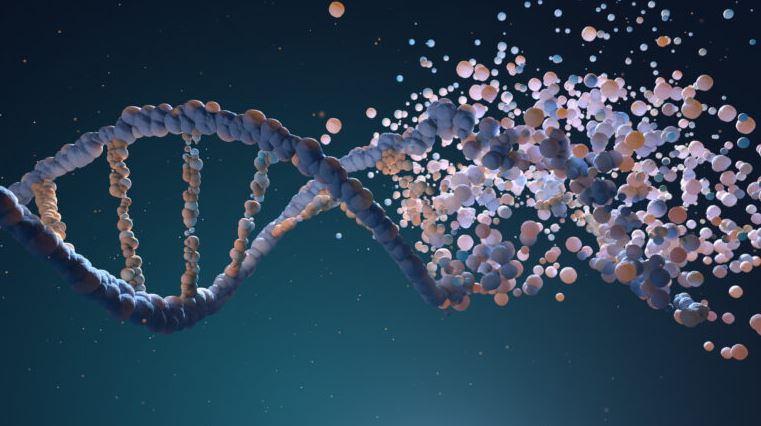
Ultimately, from fossil evidence due to the fragility of genetic sequence preservation, we find that such evidence cannot be ascertained. Ancient DNA sequences are incomplete and fragmented having a mere 521-year half life.-1 Regardless, even if a few fully complete sequences were collected, one cannot conclusively apply the sequences to the entire population. Allele frequency distributions are based on population wide distribution and never based on individual based evidence.
DNA is fragile and degrades rapidly.-1
What about evidence from modern experiments?
What about observable modern evidence of such mutations from research and labs? Are there such mutations deriving benefits as elucidated by billions of dollars of genetic research? What about all those university experiments? The answer is only bad news.
Research confirms that essentially all such rare mutations evolution demands are detrimental and deleterious to life. In fact, such rare mutations overwhelmingly, derive vast harm in life, directly causing tens of thousands of diseases, cancers, tumors, deformities, disabilities, illnesses, and premature death.
Remember that the question’s target is focused on HOW “evolution” works. That is what is its mechanism that might deliver all its claims of fungus physiologically transforming into human beings over millions of years.
What causes variety, if not evolution?
Based on all the evidence and logic, philosophically the answer is intelligent design causes variety. These attributes, like blue eyes in humans, for all we know, has always persisted in the human genetic code. We found that these rare random germline mutations posited to cause beneficial traits, actually are the same type that causes genetic disease and other harms to life. Finally, we discovered that ancient DNA is too rare, too fragmented, and to fragile to substantiate the claim that spans back thousands or millions of years. The ancient fossil material cannot substantiate the claim.
Conclusion
Normal reproduction and inherited genetic variation are sufficient to explain biological diversity within living organisms. This challenges the macroevolutionary mechanism posited to explain the rare random mutations thought to drive macroevolution. Fossil DNA evidence is too incomplete and fragmented to demonstrate the emergence of new traits through mutations across entire ancestral populations. Modern genetic research overwhelmingly associates such mutations with harmful effects rather than any significant beneficial innovation. Based on these arguments, macroevolution lacks adequate empirical support.
1- Allentoft ME, Collins M, Harker D, Haile J, Oskam CL, Hale ML, Campos PF, Samaniego JA, Gilbert MT, Willerslev E, Zhang G, Scofield RP, Holdaway RN, Bunce M. The half-life of DNA in bone: measuring decay kinetics in 158 dated fossils. Proc Biol Sci. 2012 Dec 7;279(1748):4724-33. doi: 10.1098/rspb.2012.1745. Epub 2012 Oct 10. PMID: 23055061; PMCID: PMC3497090. https://pubmed.ncbi.nlm.nih.gov/23055061/