April 30. 2026
What is Sickle Cell?
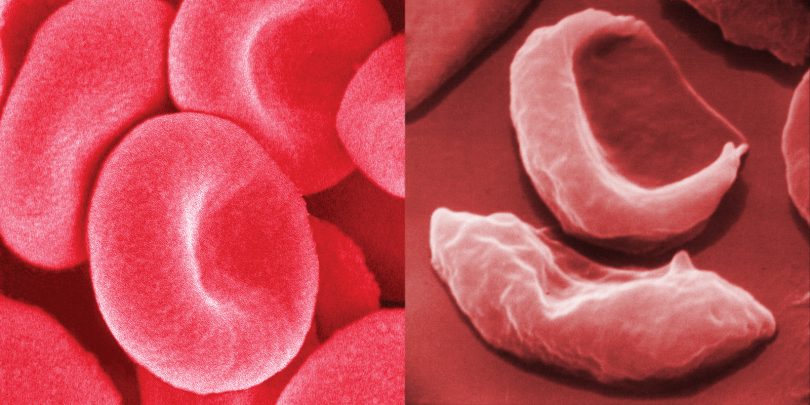
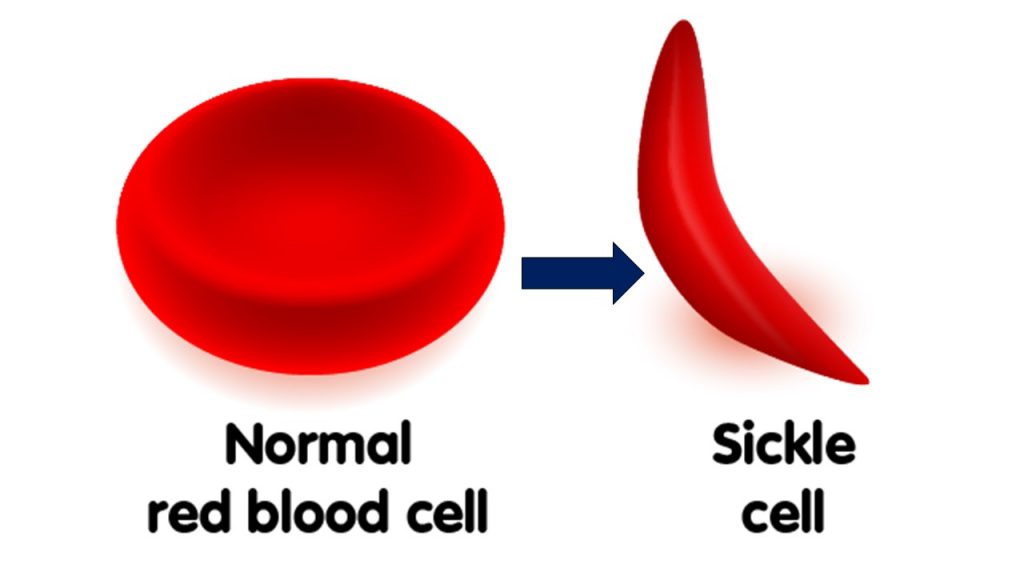
The Sickle Cell mutation is an autosomal point mutation affecting the hemoglobin beta gene (HBB) on chromosome 11p15.5. -241 It alters the structure of hemoglobin, changing red blood cells from round to a rigid, sickle shape. -47
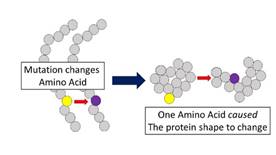
This change comes from a single amino acid substitution, a nonsynonymous mutation that affects how the protein folds. -46
How it happened
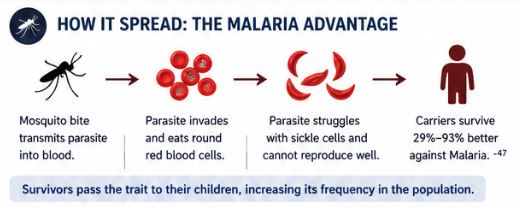
The mutation spread because many individuals were dying from malaria, which is caused by a parasite transmitted through mosquito bites. The parasite rapidly reproduces inside red blood cells, destroying them and leading to widespread death. However, a rare mutation caused some individuals’ red blood cells to become sickle-shaped. This was caused by a mutation that changed only a single amino acid change in the protein gene sequence for red blood cells.
This change amounted to a modified protein fold, a nonsynonymous fold. This new shape prevented the parasite from recognizing and infecting the cells, allowing those with the mutation to survive, despite the health issues caused by the sickle-shaped cells.
When and Why It Spread
The mutation likely first appeared about 7,000 years ago. -183 However, it became widespread around 1,500 years ago in regions where Malaria was common and widespread. -242 What would have normally been eliminated by normal hereditary function was passed and made more dominate due to the many millions being lost to Malaria.
It helped people survive
Carriers of the trait had a 29%–93% survival advantage against Malaria. -47 The parasite that causes Malaria relies on normal round red blood cells. Sickle-shaped cells interfere with its ability to survive and reproduce.
As a result, people with the trait lived longer and passed it on, while others died at higher rates. Over time, the mutation became common in those regions.
The Trade-Off
While the mutation provides a survival advantage against Malaria, it comes with serious costs.
Sickle Cell disease causes red blood cells to become rigid and sticky. -48 This leads to blocked blood flow and widespread damage throughout the body.
Common complications include (-50-51):
- Anemia
- Stroke
- Organ damage
- Acute Chest Syndrome
- Chronic pain
Patients often experience lifelong health problems and reduced quality of life.
What Science Shows
Sickle Cell is a recessive trait, meaning individuals with one copy (carriers) are usually less affected. -182
“…the sickle cell trait, is almost completely benign…” -244
But is it really? No.
Under stress, such as low oxygen, even carriers can experience complications:
“…hypoxia (insufficient oxygen levels) can lead to (the) polymerization of sickle hemoglobin, changes in red cell mechanical properties, and impaired blood flow.” -244
This helps explain why high altitudes or severe illness can trigger symptoms.
Is It Truly “Beneficial”?
Sickle Cell is often cited as a classic example of a “beneficial mutation.” That is true in a narrow sense, it helps survival against Malaria.
But overall, the picture is more complex.
“represents an asymptomatic carrier state… (but) is certainly not an entirely harmless condition… (and) may contribute to specific disease processes…” The National Library of Medicine -51
Even at the genetic level, trade-offs remain. As researcher Michael Lynch explains:
“all mutations are deleterious.” -52
And further:
“…without genetic variation, there can be no evolution…” -52
Bottom Line
- Sickle Cell is a real, well-documented genetic mutation
- It provides protection against Malaria
- It also causes serious disease and lifelong complications
- Its spread, despite is endemic disease status, is best explained by survival advantage in specific environments
- Its origin is inferred, not directly observed
In short, Sickle Cell is not a simple example of a “good” mutation. It is a trade-off, survival in one context, disease in another.
See Citations here: https://www.evolutionisamyth.com/uncategorized/citations-master/